

Safety is one of the most important factors a family considers when deciding where to live. It’s not just about the security features of the house itself, but also the conditions of the surrounding neighborhood and the level of control over who enters and leaves the community.
That’s why, when comparing homes in Arraiján, some families prioritize gated communities with controlled access. This type of organization can offer a greater sense of security by limiting entry to people not belonging to the community and establishing a checkpoint for visitors, suppliers, and delivery personnel.
For households with children or pets, this aspect can become even more important. An environment with clearly defined access points can help maintain more controlled movement within the community and reduce, for example, the possibility of a pet accidentally leaving the house ending up outside the residential complex undetected.
However, the presence of a guardhouse should not be analyzed in isolation or understood as an absolute guarantee of security. Its true value depends on how access control works, what protocols are in place, and how it integrates with other features of the community. Therefore, before buying, it is advisable to evaluate these elements along with the property itself, maintenance, budget, and the family’s actual needs.
What does it really mean to live in a gated community?
A guardhouse establishes a defined access point before entering the residential area. Its function is not to guarantee security, but to create a monitoring system that allows authorities to know who enters, for what purpose, and under what conditions.
The difference lies in how the system operates. Some communities require prior authorization, registration, or visitor identification; others have staff on duty during specific hours. Therefore, before purchasing, it’s advisable to understand what controls are actually in place and how they are applied in practice.
Entry and exit control
The primary purpose of a guardhouse is to prevent completely open access to the residential area. This allows for visitors to be announced, entries to be recorded, or for certain entrances to require authorization.
For the resident, this filter adds a layer of oversight before an outside person reaches the homes.
Greater organization within the community
An access system can also facilitate the management of frequent situations, such as moves, maintenance work, deliveries, or contracted services.
When there are clear rules, the community can better manage these temporary incomes and reduce improvisation during times of higher activity.
Safety begins before you even reach your front door.
The perception of safety depends not only on the housing itself. Lighting, internal circulation, maintenance of common areas, and how access to the residential complex is controlled also play a role.
Therefore, a guardhouse should be evaluated as part of a set of measures, not as an isolated element.
What is a gated community with a security checkpoint?
It is a residential community with a central access point designed to monitor the entry and exit of people. This may include authorizations, registration, visitor identification, or other mechanisms, depending on the specific project.
Why might a guardhouse be important to a family?
For many families, security is linked to both prevention and everyday peace of mind. Living in a community with monitored access can create a greater sense of control over the immediate surroundings and the people who move about within the residential area.
This type of organization can be especially relevant in homes with children, pets, or active family routines, where the daily dynamic involves frequent comings and goings, visits, services, and movement within the community.
Peace of mind when arriving home
Arriving at a gated community can offer a different perspective compared to a completely open environment. Knowing there’s a checkpoint before entering can provide greater peace of mind, especially during off-peak hours or when returning home at night.
Greater supervision when there are children at home

When there are children, many families appreciate environments where the movement of outsiders is more regulated. This doesn’t eliminate risks or replace adult supervision, but it can contribute to a more controlled and predictable residential environment.
It can also be relevant when children use common areas or spend time outdoors within the residential complex, as parents often pay attention not only to the housing but also to the overall dynamics of the community.
Visits, deliveries and suppliers
Communities with defined procedures for visitors and services can reduce improvisation on a daily basis. Knowing how deliveries, technicians, workers, or guests enter allows for better anticipation of these situations and greater organization within the residential complex.
For families, this can translate into a more comfortable experience, especially when they receive frequent visitors or rely on home services.
Safety as part of quality of life
The feeling of security directly influences how a family lives and uses their surroundings. It can affect everything from the peace of mind of letting children play in common areas to the comfort of walking around the community or receiving visitors without constant worry.
Therefore, when evaluating a home, security should not be analyzed solely as a technical feature. It is also part of the quality of life, privacy, and trust that a family can develop in their residential environment.
Beyond the guardhouse: what should you check in a residential community?
A guardhouse can be an important factor when comparing projects, but it shouldn’t be evaluated in isolation. The security and organization of a community also depend on how access is managed, the condition of common areas, and how clear the procedures are for residents and visitors.
Before making a decision, it is advisable to review several aspects that help to understand how the residential complex actually works.
Is there permanent security personnel?
Not all communities operate in the same way. Some have staff on duty around the clock, while others work with specific schedules or different arrangements.
Therefore, it is important to confirm the actual coverage, who manages the service, and what happens outside of regular hours.
How are residents and visitors identified?
The identification system may vary depending on the project. Some communities use registries, cards, prior authorizations, or digital systems.
Rather than assuming how it works, the important thing is to know what method is used, who has access to that information, and what steps a visitor must follow to enter.
Are there access rules?
The rules for visitors, deliveries, moving services, or suppliers can greatly influence the daily dynamics.
It’s worth asking if there are different schedules, special authorizations, or procedures depending on the type of admission. These rules help you understand how organized the residence is and what a family can expect in common situations.
How is the community lit and maintained?
The lighting of streets, access points, and common areas also contributes to the perception of safety.
During a visit, it’s advisable to observe the condition of the streetlights, visibility in pedestrian areas, and the overall upkeep of the surroundings. A well-maintained community typically offers better conditions for getting around and using its spaces at different times of day.
What common areas exist and how are they managed?
It’s not enough to know what amenities a project offers. It’s also important how they are managed, who can use them, and what rules govern their use.
In shared spaces, cleanliness, maintenance, schedules, and supervision can influence the daily experience of residents as much as the infrastructure itself.
Houses in Arraiján: how to assess security before buying
The safety of a community cannot always be assessed based on a marketing description or a single visit. Before choosing between different homes in Arraiján, it’s helpful to observe how the residential complex functions under real-world conditions and compare that experience with the information provided by the project.
Visit the community at different times
A daytime visit can only reveal a part of the residential complex’s dynamics. If possible, touring the community in the late afternoon or evening allows you to observe aspects such as lighting, vehicular traffic, activity in common areas, and the operation of access points.
Ask how the guardhouse works
Rather than simply confirming its existence, it’s important to understand what happens when someone arrives who doesn’t live in the community. Asking who authorizes entry, what happens when a resident is unavailable, and how after-hours visits are handled can provide a much clearer picture of the system.
Observe the movement of residents and visitors
The daily routine also provides information. During the visit, it’s worth observing whether vehicles slow down upon entering, whether visitors follow any procedures, and whether there is a clear distinction between access for residents and non-residents.
These details allow us to understand how the rules are applied in practice, beyond how they are formally stated.
Check lighting, access points, and common areas.

In addition to the main entrance, it’s advisable to observe internal streets, parking areas, walkways, and shared spaces. Visibility, the condition of the lighting, and general maintenance can influence how residents use these spaces, especially at night.
It is also important to identify if there are other entry or exit points and how they are managed.
Check what’s included in the administration or maintenance
If the community charges a maintenance fee, it’s important to know what services it covers and which ones might incur additional costs. Security, lighting, cleaning, maintenance of common areas, and administration may be included in the fee, but this varies from project to project.
Confirming these details allows for a more complete comparison of properties, showing the monthly cost and the services the resident actually receives.
Security gate vs. other factors when choosing a house
The presence of a security gate can provide peace of mind and organization, but it shouldn’t overshadow other aspects that also influence the experience of living in a community. When comparing properties, it’s best to analyze the whole picture and not make a decision based on a single feature.
| Factor | What should the family ask themselves? |
|---|---|
| Security | How does access control work and what complementary measures are available? |
| Distribution | Do the spaces reflect the family’s current and future routine? |
| Outer space | Does the patio, terrace, or available area fit what they really need? |
| Community | Are the environment and rules of coexistence compatible with your lifestyle? |
| Maintenance | What services are included in the fee and what is the monthly cost? |
| Financing | Is the property being kept within a sustainable payment level? |
| Location | Are the commute times reasonable for work, school, and daily activities? |
The goal isn’t to find a property that excels in only one of these areas, but rather to identify one that offers a suitable balance based on each family’s priorities. Two homes with similar characteristics can represent very different experiences if factors such as maintenance, community organization, or commute times change.
What type of family might value a house with a guardhouse the most?
Not all families prioritize the same things when looking for a home. For some, the size of the house or yard may be more important; for others, the way the community is organized may be the deciding factor. A security gate can become more relevant when the family’s routine depends on having a more controlled and predictable environment.
Families with children
In homes with children, parents often pay special attention to the dynamics of the residential area and the way people and vehicles circulate within the community.
Controlled access can provide a greater sense of peace of mind, especially when children are using common areas or spending time outdoors. However, this type of environment is not a substitute for supervision or other safety measures.
Families who receive frequent visitors

When family members, friends, technicians, or suppliers regularly come in, having clear procedures can make daily organization easier.
Knowing how a visit is authorized, what information must be provided, and what happens upon arrival allows for better anticipation of these visits and avoids confusion at the entrance. This is especially useful
for people seeking greater privacy.
For some buyers, privacy is an important part of the residential experience. Limiting the free entry of outsiders can contribute to a more controlled flow of traffic within the community and reduce unnecessary external traffic.
Is it worth prioritizing a security checkpoint when looking for houses in Arraiján?
Prioritizing a security gate can make sense when monitoring the surroundings is a genuine need for the family. For example, it can be more important in homes with young children, pets, elderly adults, or people who spend a significant amount of time at home and value a community with more regulated traffic.
It can also be relevant for those who frequently receive deliveries, maintenance personnel, family members, or suppliers, since a well-defined access system allows for a filter to be established before these people arrive directly at the homes.
However, the presence of a security gate shouldn’t compensate for deficiencies in other important areas. A community might have controlled access but suffer from poor lighting, inadequate maintenance, deteriorated internal roads, or unclear rules for visitors. Therefore, it’s important to consider how the entire complex functions and not just focus on the entrance infrastructure.
When comparing homes in Arraiján, a helpful way to assess this point is to ask yourself what would actually change in your family’s routine if you lived in a gated community. If the answer relates to greater peace and quiet, privacy, or better organization of your surroundings, it’s likely a relevant criterion. If, on the other hand, it involves higher maintenance fees or sacrificing location, space, or budget, you’ll need to evaluate whether that trade-off is truly worthwhile.
Ultimately, a security booth adds the most value when it’s part of a well-managed community and addresses a specific household need. Its importance lies not only in its existence, but also in how it functions and how much it influences the daily lives of those who live there.
Checklist before choosing a house in a gated community
Before buying, it’s advisable to check how the community actually works and not just focus on the presence of a guardhouse. This checklist can help you compare different options with clearer criteria:
☐ Confirm how access control works.
☐ Ask who manages security and what their responsibilities are.
☐ Inquire about coverage hours and what happens outside of those hours.
☐ Verify how visitors enter and what authorization they need.
☐ Review the procedures for deliveries, technicians, and other service providers.
☐ Ask how moving, remodeling work, or special access are handled.
☐ Visit the community at different times of day, including at night if possible.
☐ Observe the lighting in streets, parking lots, and common areas.
☐ Check the condition of the entrances and whether there are any secondary entrances.
☐ Confirm which services are included in the maintenance fee.
☐ Ask about the rules for living together and using common areas.
☐ Compare these conditions with other communities before making a decision.
Houses in Arraiján with a guardhouse: find a community that suits your family
When looking for a home, the safety of the environment should be analyzed along with other elements that influence daily life: the layout of the house, the available spaces, maintenance, common areas and the way the community functions.
In Arraiján there are different types of residential developments, so it is worth comparing not only the homes, but also the characteristics of each community and the measures it offers to promote an organized environment.
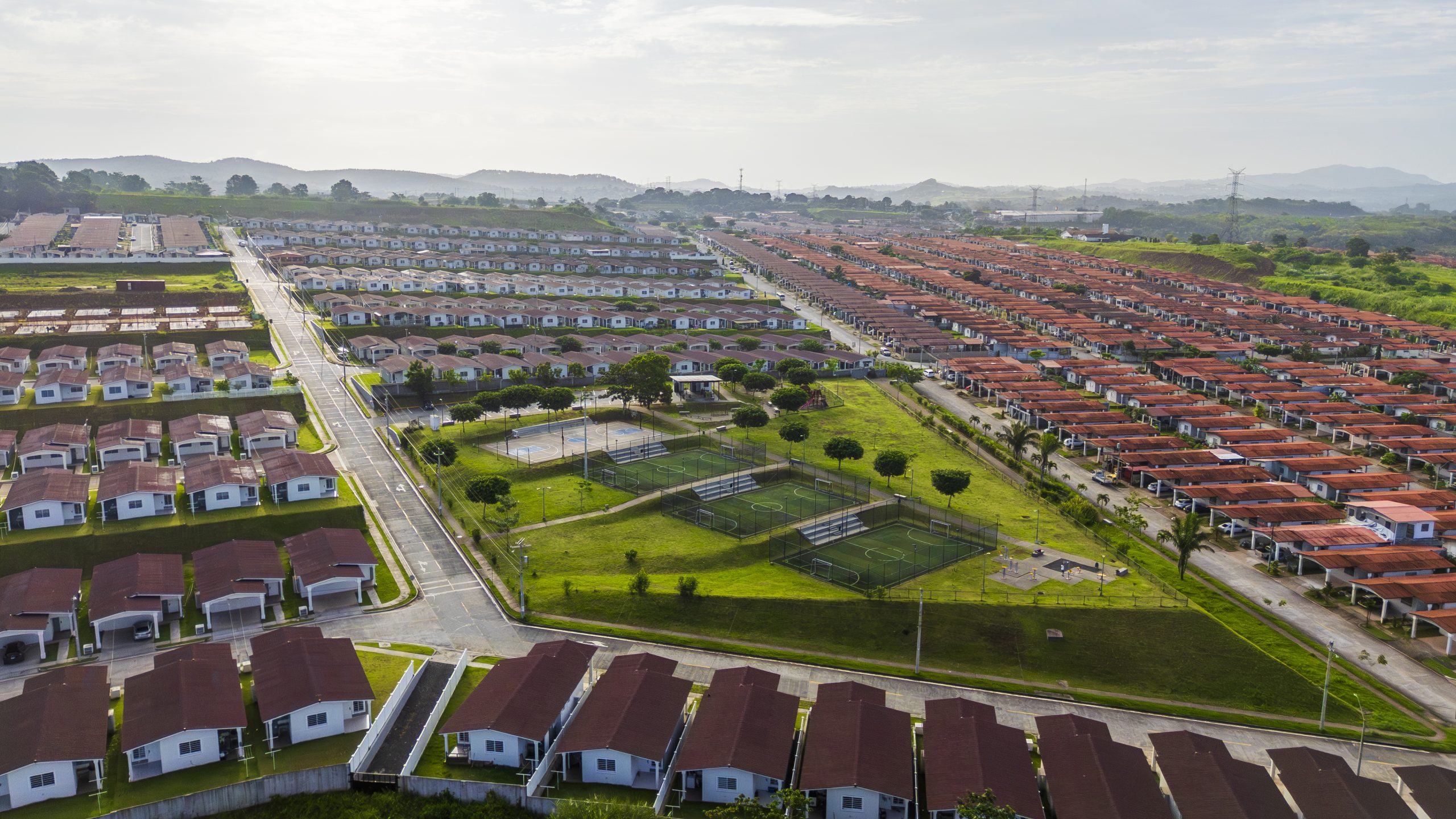
Brisas del Golf Arraiján , one of the projects developed by Grupo Residencial in West Panama, is a planned community that integrates housing, recreational areas, and services for its residents. It also features a National Police substation within the community, contributing to the area’s security.
If you’re evaluating homes in Arraiján, visiting the project in person can help you compare the available models and better understand how the community functions on a daily basis.
Check current availability, prices, purchase conditions and features of each model to identify which one may best suit your family’s needs.